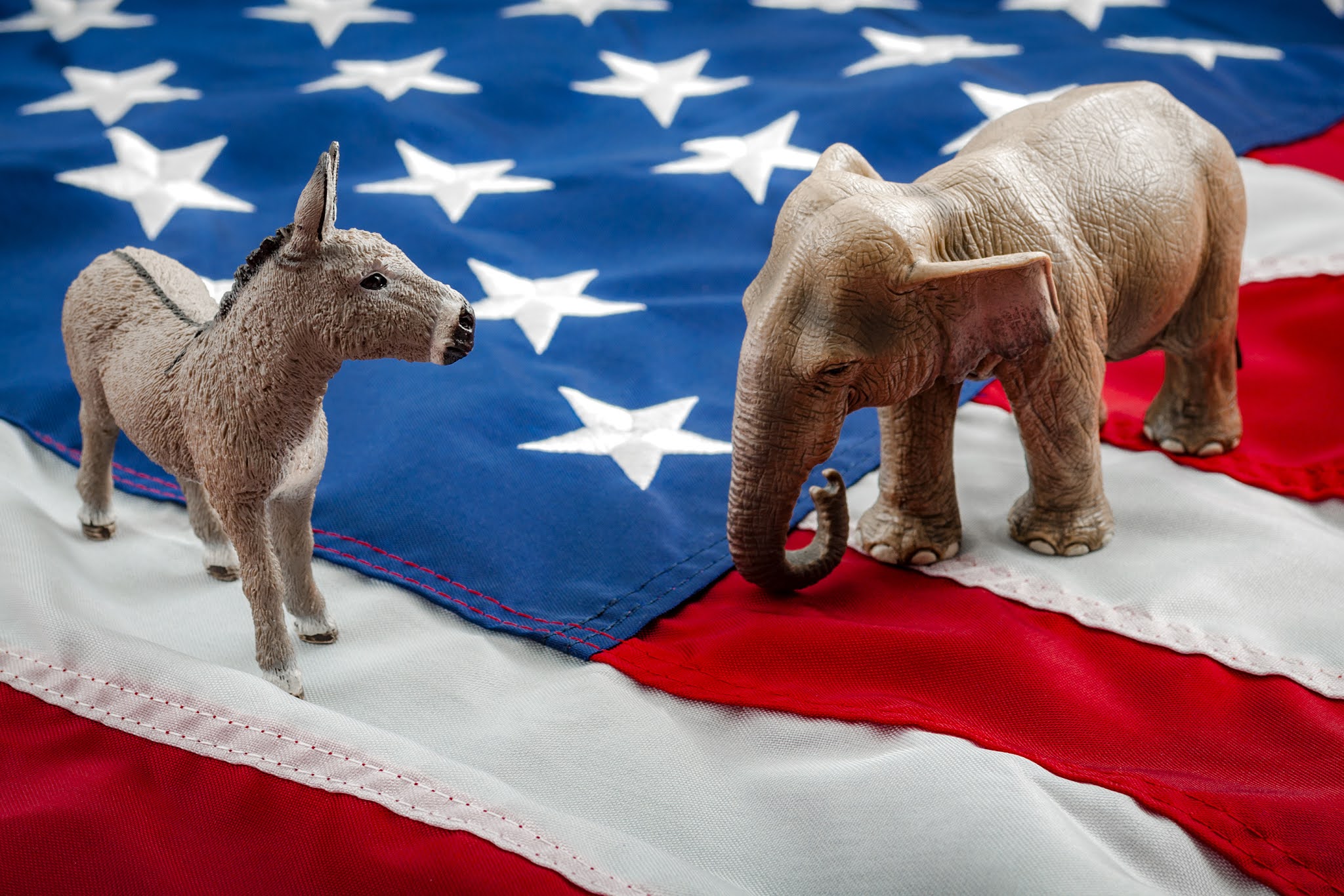
As I look at the concerns of evangelicals on social media over the past year, I have come to the conclusion that the God of evangelicals today is not Jesus but politics. When God proclaimed in the Ten Commandments, "You shall have no other gods before me," He was writing about any priority or concern that would take our primary attention off of Him. This is why, speaking of money, for instance, in Matthew, he says, "You cannot serve God and money."
Many things can supersede our highest commitment to Him. I suggest that power and politics have become a false God of Evangelicals. One can trace the genesis of this back to the founding of the Moral Majority in 1979, founded by Jerry Falwell Senior. Those were heady days for the religious right. It was pivotal in bringing Ronald Reagan to the White House, a friend of evangelicals, and the religious right realized that it could wield power previously unknown as a voting block.
Evangelicals became a powerful lobby in the halls of power. The seduction of power is not the purview of politicians alone. We, as evangelicals, were seduced as well. We became convinced that we could turn the levers of power and solve the issues of our nation through the election of allies in the White House, legislation that was in our interests, and turn the judiciary in our direction.
Having these allies, friendly legislation, or addressing the concerns that we have as believers was not wrong. However, in the success of our efforts, we started to believe that the key to our nation's success and to the advancement of Christianity was to be found in political power rather than in the God we worship, who is above all, over all and in all. Our confidence moved from God to political power. And in the process, political power became a god that rivaled the one and true God.
This also led many evangelicals to ally themselves with the Republican Party because this is where their power base existed. Pastors and evangelical leaders became spokespersons for their party. They often became unapologetic cheerleaders for politicians who lacked any moral compass or personal integrity - or concept of truth. After all, they were joined at the hip to a political party, and come "hell or high water," they intended to hang on to that power. And power has become the key to national transformation in the minds of many rather than God and the Holy Spirit. In fact, numerous posts by evangelicals in the run-up to the recent election insinuated that one could not be a believer and vote for other than the Republican Party.
When we ally ourselves with a god that is not God, we often overlook corruption, lies, ungodly behaviors, and unrighteousness because we cannot offend our power base. Power corrupts evangelicals and the issues they attend to, just like power often corrupts politicians. Power becomes a god, and in the end, political power starts to defuse our ultimate power that is found in Christ and His transforming work in our lives.
Regardless of how we as individuals vote, the marriage of the religious right with a political party has done us no favors. It has diluted our influence, caused us to overlook unrighteousness, and has stolen our prophetic voice in society. When one cares about power and the influence it brings, we move away from speaking truth to power.
Jesus did not and does not carry the card of any political party. Nor did Jesus or Paul say much at all about the politics of their day, which were far worse than the politics in our nation. Why? Because neither Jesus nor Paul put their trust in the political system. Rather, they put their trust in God, the transformation of the Holy Spirit, and a Gospel that has the power to transform individuals, communities, and institutions. Jesus put it well when he said, pay to Caesar what is Caesar's and pay to God what is God's. Perhaps we have paid more attention to Caesar than to the concerns of God.
All of us are at risk of elevating various gods above the one God who claims our full allegiance. In our individual lives, we can elevate our work above Him, we can put our trust in our resources rather than Him, and we can also put our trust in political parties rather than in Him, whatever that party is. Or the power that comes with allegiance to a political party.
Can Christians impact the political system? Yes! Daniel did in his day serving one of the worst tyrants of the ancient world. Wilberforce did in the abolition of slavery in England. We should be deeply thankful for men and women of faith who serve in government and live out their convictions in their places of influence. Paul had supporters who were in high places of government in his day.
Should Christians challenge unjust laws or practices in the fabric of our society? Yes. But we have been very selective in what we concerned ourselves with. Absent from the concerns of many white evangelicals, for instance, is the concern for racial reconciliation and justice - a concern of the prophets throughout the Old Testament. And Paul, in the New.
We have been outspoken on the issue of abortion and the evil that it is and have neglected the truth that to be pro-life is to be pro-life in all situations and for all people. Being pro-life means that I care about righteousness, justice, and fairness in all of society. The command, "Thou shall not kill," is stated in the negative because one cannot catalog all the ways that we keep this commandment by enhancing the lives of those around us, caring for the needy, the hurting, the poor, and the hungry, or in dealing with racism that destroys the dignity and opportunities of many - those who are without power or marginalized by society.
We should always use the means that we are given to bring about a better nation. Jeremiah advised the Jews living in captivity to pray for the peace of the city in which they lived and to contribute to its success. For us, that includes using the political system, courts, and legislation to pursue a more just society.
But politics is not the ultimate answer to our nation's ills. As God told Solomon, "If my people, who are called by my name, will humble themselves and pray and seek my face and turn from their wicked ways, then I will hear from heaven, and I will forgive their sin and will heal their land." 2 Chronicles 7:14.
If we spent as much time cleansing our own lives, seeking the face of God, and praying for our nation as we do arguing about politics and engaging in the political system, we would see a more righteous and just society.
Only God is God, and He is the One who can bring healing to our nation. All other gods, including our god of politics and power, will not and cannot.