Growing health and effectiveness

A blog centered around The Addington Method, leadership, culture, organizational clarity, faith issues, teams, Emotional Intelligence, personal growth, dysfunctional and healthy leaders, boards and governance, church boards, organizational and congregational cultures, staff alignment, intentional results and missions.

Thursday, March 17, 2022

Lessons I have learned in working with church conflict


After many years of working with churches that find themselves in conflictual situations, I have concluded that there are six non-negotiable principles for a successful outcome.

First, an outside facilitator is usually necessary. The nature of conflict is that people take sides so it becomes very difficult for anyone from within to play the role of a neutral mediator. In fact, the larger the conflict the more critical it is that the individual you bring in is trusted by both sides to have the best interests of the church at heart. The sooner you bring someone in when it is clear that the situation is dangerous the better.

Second, the issues that are fueling the conflict need to be brought into the light. Conflict thrives in the shadows, in gossip, in cliques, in assumptions and behind the scenes. Bringing all the competing agendas, attitudes and positions into the light and allowing all members of the congregation to understand what is being said, what is happening and what the issues are takes the mystique out of the situation and allows everyone to respond from a position of knowledge. It also removes the power of those who have an agenda but have not been willing to make it public but have instead been putting on pressure from behind the scenes. Getting everything on the table allows all stakeholders to understand what is going on and to have a voice in solving the issues. Ironically, those who are most vociferous in their opinions overplay those who agree with them when in fact, if all facts were known, the majority would not agree. 

Third. Reconciliation is always preferable to disunity. This is actually a hard concept for many who have taken a position in church conflict. First, our natural tendency is to take a hard line and once we have told others about our own line-in-the-sand it is humbling to change our position. Second, the longer conflict goes on, the more we see the members of the opposing side as evil, dishonest, disingenuous, people with bad motives and once we demonize people it is hard to ever think that reconciliation is possible. 

To not be willing to consider reconciliation is to make a mockery of God's reconciliation with us and His call for us to be reconcilers. Speaking of church conflict, this is what Paul had to say to the Corinthians. "I appeal to you brothers, in the name of our Lord Jesus Christ, that all of you agree with one another so that there may be no divisions among you and that you may be perfectly united in mind and thought (1 Corinthians 1:10)." 

In Ephesians 4:1-6 Paul writes, "As a prisoner for the Lord, then, I urge you to live a life worthy of the calling you have received. Be completely humble and gentle; be patient, bearing with one another in love. Make every effort to keep the unity of the spirit through the bond of peace. There is one body and one Spirit - just as you were called to one hope when you were called - one Lord, one faith, one baptism; one God and Father of all, who is over all and through all and in all." Having said that, I acknowledge that sometimes it is not going to be possible to reconcile and stay together. Sometimes it means that we part ways and speak well of one another.

Fourth, ground rules need to be established. One of the most incendiary fuels in all conflict is the absence of ground rules - what is acceptable and what is not. For a list of the ground rules that I recommend, see my blog, Negotiating church conflict in a healthy manner. Or if you want to keep it very simple, look back at the passage in Ephesians 4:1-6 where he says be completely humble and gentle; be patient, bearing with one another in love. Make every effort to keep the unity of the spirit through the bond of peace. When you think about it, these characteristics are almost always lacking when conflict is taking place. What gets in our way? Pride, wanting to get our own way, anger, and our emotions.

Five, you probably will not convince everyone. There are people who don't want to reconcile. There are people whose pride is far greater than their humility and they have no desire to seek a win/win solution. In working with churches in conflict, I don't do very much to try to convince the unconvincible even if they have the loudest voices. I am looking for people of peace and reason who are willing to work together to see the church come together in unity. This does not mean that the issues that have caused disunity are swept under the rug. To the contrary, as principle two states, they are all on the table and those that need to be addressed are addressed. To do that successfully, however, it requires men and women of peace and reason, whose personal agendas do not cloud their emotions.

Who is most likely to leave in church conflict? Those who have taken a hard stand and cannot or will not compromise that stand. Frankly, it is good for them to leave because they will simply contribute to ongoing conflict if they are not willing to come together with the rest of the congregation.

Sixth: It is a process. Church conflict does not start overnight and it does not get settled overnight. It may take a year in some cases to bring the church back to health. The benefits of doing so far outweigh the trauma of either a church split (which damages churches for years to come) a powerplay by a faction in the church (which causes huge trauma to a church and a significant lack of trust) or not dealing with it at all which dooms the church to later issues.

What is needed for a healthy process is a willingness of the congregation to work together recognizing that how they handle their differences will either enhance or diminish the reputation of Jesus. If His reputation is at stake - and it is - I will do all I can to enhance it.


Additional blogs on church conflict:

Negotiating church conflict in a healthy manner

8 Reasons in my experience that churches experience major conflict

Church conflict: Finding the core issue and the common source

Seven things to understand about church conflict

Church conflict, christian character and the reputation of Jesus


Wednesday, March 16, 2022

The Challenge of Legalism


One of the challenges of life in Jesus is that of living in freedom rather than in bondage to rules and regulations. This isn’t because Jesus gives us unnecessary rules and regulations. It is because we often create those rules because we believe they are necessary for Godly living, and then we impose them on others as well. In fact, if you have been around any church long enough, you discover what is acceptable and what is unacceptable and I am not referring to the teaching of Scripture but to the rules we impose. 


For instance, growing up, I was not allowed to play outside on Sunday. Not sure why but it was a rule in our household. We also didn’t have a television because they were not conducive to Godly living. Nor did we go to movies or school events where dancing was taking place. In some churches and whole denominations, drinking alcohol is prohibited. The joke in the south, where this is prevalent, is that everyone goes to the next county over to purchase their liquor because they don’t want to be seen purchasing it in their own backyard. In other churches you must tithe ten percent of your income. Some people have a highly regulated set of rules for how you raise your children, ostensibly based on Scripture. Others have rules for how you date or don’t date if you are single. 


All of these are personal convictions that are legitimate to hold. But, they are personal convictions and should never be imposed on others. When we do we become legalists who are making rules that Jesus does not make and imposing rules for living that He does not impose. It is called legalism. The problem with legalism is that it moves our faith from a personal relationship with our creator to a set of rules and laws. The former is life giving and vibrant. The latter is dead faith and trying to earn God’s favor with rules and regulations. One focuses on a relationship with Jesus and the other on traditions imposed by men.


Those who make such rules are very good at trying to convince you that you should keep them, and equally good at creating guilt if you don't. But remember Paul’s words. “It is for freedom that Christ has set us free. Stand firm, then, and do not let yourselves be burdened again by a yoke of slavery.”


Paul calls legalism, with its rules and regulations, slavery. We become slaves to rules as a way of pleasing God. Don’t go there, says Paul. He says to the Galatians “It is for freedom that Christ has set us free. Stand firm, then, and do not let yourselves be burdened by a yoke of slavery. (Galatians 5:1).


Does that mean that we are free to do anything? Not at all. Paul writes, “You my brothers and sisters, were called to be free. But do not use your freedom to indulge the flesh; rather, serve one another humbly in love. For the entire law is fulfilled in keeping this one command; ‘Love your neighbor as yourself.’ If you bite and devour each other, watch out or you will be destroyed by each other.” (Galatians 5:13-15).


Paul is saying three things here. First he tells us not to become enslaved to a bunch of rules and regulations that are not from God. Second, to live in freedom. But third, to not use our freedom to indulge our flesh - to get involved with things that are not good for us. And finally, rather than living by rules and imposing those rules on others, we are to simply focus on loving each other. 


Living by rules and regulations creates friction and dissension. The human tendency is to keep adding to those laws and regulations, and lots of energy goes into making sure that everyone is toeing the line. Ironically many people look for rules in their Christian lives. Jesus gives us principles to live by but there are many areas where we make lifestyle decisions based on our conscience. But they are our decisions and not binding on others.


And our decisions in areas of life that Jesus has not specified are based on our freedom. We are free to choose how we live because Jesus has called us to freedom. Our choices are based on our conscience and are not to be imposed on others. Nor can others impose their decisions on you. 


Paul actually calls legalism, or the imposition of rules and regulations that Jesus has not specified, another gospel. He calls it this because legalism assumes that if you keep these rules God will be pleased with you. This was the religion of the Pharisees. They had rules for everything and keeping those rules meant that you were pleasing God. Jesus, however, said no! That is not true faith and that is not the gospel. The Gospel is trusting in Jesus for our salvation based on His death for our sin. 


Are you living in the freedom that God called you to in Him? Are there lifestyle decisions that you are keeping that someone else has told you to keep but where Jesus and Scripture are silent? Is your relationship with God more about rules and regulations than it is a relationship with Jesus? If so, Jesus invites you to a life of freedom, unconstrained by the rules of others. He really does!


Father, help me to live in your freedom and to use that freedom to serve you and others. Free me from the burden and guilt of man made rules and regulations and give me joy in my relationship with you. Amen.


The question for today: What are the rules and regulations I have adopted because someone told me to? Do I agree with them? Does Jesus demand that I keep them?


Monday, March 14, 2022

When the Church and Government are intertwined the Prophetic Witness of the Church is Compromised


Last week a group of prominent American evangelical leaders wrote a letter to Patriarch Kirill, head of the Russian Orthodox Church imploring him to intervene and stop the bloodshed in Ukraine. He has fully endorsed the Russian onslaught of Ukraine and fully supports President Putin.


One could wonder why a so called Christian leader could in good conscience support what we are watching in Ukraine: The brutality, the targeting of civilians and the raw use of power to destroy a people and a country. It is a good question and one that religious movements everywhere should pay attention to - including in the United States.


Why would the Russian Orthodox Church support what President Putin is doing, which includes the slaughter of fellow believers in Ukraine? The answer is simple. The Russian Orthodox Church and its leader has made a Faustian bargain with the government of Russia. In exchange for their support of the government, they receive the security of being able to operate unimpeded by the Russian government and even receive significant financial support from the government. Unlike other Christian movements in Russian who are under significant pressure, they reign supreme.


In exchange, the church promises to support the Russian government, endorse their policies, and even join the government to defend Russia against negative Western influences. Understand that this is a partnership between the government, the church and inevitably the Russian intelligence agencies who are intertwined with this whole security issue. 


To complicate issues, in 2019, many Ukrainian parishes left the Ukrainian Orthodox Church with was under the Russian Orthodox Church to form a new Orthodox church of Ukraine. This infuriated the Russian Orthodox Church and Mr. Putin who saw this as a threat to Russia.


David French in an insightful article entitled The Best of Christian Compassion, the Worst of Religious Power says this about the current situation in Russia. "This is the church at its worst, when it weds itself to state power and wields the sword to advance God's kingdom on earth. We are watching the deep darkness of malevolent Christendom, a religious movement that will slaughter innocents to fight "decadence" and bomb hospitals to combat "sin." When you see Putin's armies advance, you can think, this is why our nation rejects established religion."


Ironically, it is also believers who are laying down their lives to fight this onslaught of the Russian government and Russian Church as well as Christians who are providing much of the relief to the refugees that are inhabiting Ukraine or fleeing Ukraine.


It should also be noted that many evangelicals over the past several decades have been seduced by Putin's "religious veneer" as a member of the Russian Orthodox Church and a friend of its Patriarch. Indeed, they are joined at the hip, both benefiting from the arrangement but there is nothing Christian about Mr. Putin nor is he a person of personal faith. He cares about one thing only: Power and his agenda of recreating the Russia that existed before communism. Ironically it would seem that the Russian Orthodox Church wants exactly the same thing and in its proximity to power it also has power. 


None of this, however, has anything to do with Jesus or the Gospel. I think regularly of the hurting heart of God watching what people are doing (in His name) in Ukraine. It is sick and sad and not Jesus in the least. 


All of this should cause the American church and especially evangelicals to be reflective on the dangers of intertwining the church with politics or the church with the political power of the government. And it has done plenty of this. Any of these "bargains" end badly for Jesus and the church. The power of the church comes from the power of the gospel, not from its proximity to political power. The situation with the Russian Orthodox Church is a warning as to where this relationship will end. Power corrupts politicians but it also corrupts religious movements who seek to derive their influence and power from those who are in power and have influence.


The religious right in the United States needs to understand the truth about power that Paul wrote in Romans 1:16-17. "For I am not ashamed of the gospel, because it is the power of God that brings salvation to everyone who believes: first to the Jew, then to the Gentile. For in the gospel the righteousness of God is revealed - a righteousness that is by faith from first to last, just as it is written: 'The righteous will live by faith.'"


The power the church needs and has comes from the gospel and not from political proximity. When the church and government are intertwined the prophetic witness of the church is compromised and its power is diminished. 


See also, Putin is the New Stalin and Russia, Ukraine and the thin veneer of civilization


Thursday, March 10, 2022

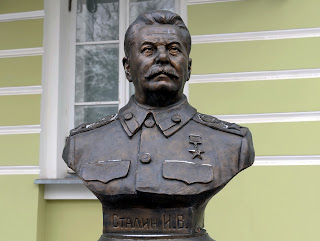
Putin is the new Stalin


I have come to the conclusion, with considerable unhappiness that Putin is the new Stalin and just as President Xi is taking China back to the days of Mao, so Putin is taking Russia back to the days of Stalin. And in both cases, those were dark days where many suffered unjustly. Why do I suggest this. Consider the following which come directly out of Stalin's playbook.


Those who disagreed with Stalin paid for that disagreement with their lives, imprisonment (Siberia) or torture. The same is happening under Putin. He has killed his enemies in Russia and outside of Russia, has imprisoned thousands and even a statement of opposition to the current war can get you fifteen years in ugly Russian prisons. And, like Stalin he seems to care not what the rest of the world thinks.


Putin, like Stalin dresses actions with a veneer of judicial "fairness." Time and again, charges against his political enemies have been decided before a trial which is simply window dressing.


Subordinates would not tell Stalin what they really thought for fear of their jobs or lives. Neither does it seem that Putin's people are willing to speak truthfully with him if it means disagreeing with him.


Stalin was willing to kill people indiscriminately to accomplish his purposes without an ounce of remorse. He starved the Ukraine killing millions, and shot those who got in his way, or that he thought might get in his way. Putin used these kinds of tactics in Chechnya, Syria and now in Ukraine. People's deaths don't bother him. Shelling hospitals and schools and residential areas is a war tactic. Millions of refugees does not phase him. He will do whatever he needs to in order to accomplish his ends. Without apology and without conscience. There is a ruthlessness to both men that defies logic or humanity.


Putin, like Stalin is a liar to the core of his being. Both believe that the more you say something untrue the more the population will embrace the lie. And in many cases that is what happens. It is impossible to believe anything that Putin says and the same was true of Stalin.


Stalin tightly controlled the media in order to ensure that his party line was the one line that was communicated. Putin does the same thing and has essentially shut down any independent media in the country by passing laws that lie about the war or the country or its leaders. Of course the definition of a lie is whatever Putin does not want to hear.


Putin sees himself as a Tsar - one who is all powerful, always has the final say and whom no one can cross. While Stalin would not have thought of himself that way, he cultivated the same result by ruthlessly eliminating any and all rivals. Putin, like Stalin is consumed by his legacy and power.


Both men were and are deeply suspicious of people of faith. Stalin closed the churches and imprisoned or killed pastors. Putin has co-opted the Russian Orthodox Church for his own political purposes and has made the lives of evangelicals very difficult. The Orthodox church has made a Faustian bargain with Putin and benefits monetarily from that bargain (or did till the ruble became worthless). Evangelical Christians who will not make such a bargain are harassed, denied building permits or the ability to minister as they desire.


Both Stalin and Putin are characterized by an utter lack of any sense of righteousness. For them it does not exist. What matters is raw unadulterated power. Period. Anything or anyone that gets in the way of that power or their personal will can be sacrificed at will.


What characterizes both men is the utter disregard of what the world thinks of them. Apart from wanting to be feared, they are willing to engage in war crimes, killings, corrupted judicial proceedings and blunt force to get their way regardless of world opinion. It takes a very cold and ruthless heart to go there but that is what we are dealing with.


Moving from places of anxiety to places of peace


“Do not be anxious about anything, but in every situation, by prayer and petition, with thanksgiving, present your requests to God. And the peace of God, which transcends all understanding, will guard your hearts and your minds in Christ Jesus.” Philippians 4:6-7


Anxiety and worry are a part of the human condition. It is easy for someone to say, you shouldn’t worry, but I don’t know anyone who can go through the situations of life without anxiety and worry. We are finite human beings, and the fact that we cannot know the end from the beginning makes worry a part of life.


That being said, moving from worry to faith, from anxiety to dependence on God, is one of the journeys that Jesus invites us on. He does not want us to live with worry and anxiety but to live with faith and trust and allow our concerns to be carried by Him and not by us. 


I find it interesting that the words “do not be afraid” are repeated 365 times in the Bible, once for every day of the year. We need to hear these words every day because we need them daily. Scripture reminds us not to worry about having enough money for tomorrow because God looks after His own. We are told not to worry about the future because each day has enough worries of its own, and He carries them for us. We are told not to be anxious but to give our cares to Him.


There is an antidote for worry, and that is prayer. As Paul says in Philippians 4:6-7, “Do not be anxious about anything, but in every situation, by prayer and petition, with thanksgiving, present your requests to God. And the peace of God, which transcends all understanding, will guard your hearts and your minds in Christ Jesus.” 


We are invited in all situations, in all circumstances to bring our anxieties to Jesus in prayer and petition, and present our requests to God. Interestingly, Paul says that we should do this with thanksgiving. Why Thanksgiving? Because He is capable and able to intercede in our situation and carry our worries for us. And the exchange is this: We give him our anxieties, and he gives to us the peace of God which transcends all understanding. And that peace will guard our hearts and our minds - where anxiety and worries live - in Christ Jesus. I’ll take that exchange any day.


Some years ago, I was on a flight from Bangkok to the United States, and just as the plane was ready to take off at the end of the runway, the flight attendant saw that I was sick and had lapsed into unconsciousness. I woke up with my 20-year-old son kneeling beside me, and I heard the pilot announce that we were returning to the gate for a medical emergency. I asked my son if that was me, and he said, “yes, dad.” A few minutes later, we arrived at an unknown hospital to figure out what was wrong. 


They thought I had suffered a seizure, but there was no evidence of this with a brain scan. But over the course of the day, I went from sick to very sick to needing to be intubated in the ICU. A year earlier, I was intubated for a month in a coma in the United States for multiple organ failure and MRSA pneumonia and never should have survived. It was a 45-day hospital stay that took me years to recover from. Now a year later, still in recovery, I found myself in the same situation in a foreign country: organs shutting down, massive pneumonia, and knowing that my odds were not good.


I asked the doctor if they were going to put me into a coma like the year before, and he said no. “We will put you under to intubate you, and then you will be awake.” So, an hour later, I found myself awake, with a garden hose contraption down my throat, hooked up to some 15 pumps of various kinds and a breathing machine, and massive, unbelievable pain.


That first night I contemplated my odds. They were not good. I asked God to remove my pain, but that didn’t work. And then, as I reflected, my mind kept going back to a message I had preached about Peter getting out of the boat and walking toward Jesus and Jesus saying to him. Do not be afraid. And I asked God to take away my fear of death and the fear of the unknown. It was a gigantic struggle that first night, and it was repeated again and again as it would be 14 days before I was off the ventilator. But amazingly, God did exactly what He promised, and I traded my fear and anxiety for a supernatural peace that only God can give. 


The pain did not lessen. In Thailand, they didn’t provide pain medication, and with massive pneumonia, you feel like you are breathing through mud. Every hour they would disconnect the breathing machine, bag me to breathe, and vacuum out my lungs so that I could breathe again freely. That experience was like having a heart attack, and every hour felt like twenty-four hours of terrible pain for fourteen days. But, I traded fear for peace because of God’s promise. I realized that the greatest gift is when we come to the end of all of our resources, and all we have left is Him. Then we realize that He is all that we need.


Jesus is inviting you today to trade your worries and anxieties for His peace. That takes place as we bring our concerns to him daily in prayer and petition - with thanksgiving. And He can take those anxieties on Himself and leave us with supernatural peace. So whatever your anxieties are today, He invites you to give them to Him.


Father, I freely admit that I need more of your peace and less of my worry and anxiety. I give you my deepest fears and anxieties today and ask that you fill me with your peace that passes all understanding. Thank you for your goodness to me and your desire to carry my burdens yourself. Amen.


The question for today: What worries and anxieties do I need to give to Jesus in exchange for His supernatural peace.


Wednesday, March 9, 2022

Creating Space for God in our Busy Lives


When you are used up and tired out, frazzled and discouraged, where do you wish you could go? For me, it is a stream in Montana where I am fly fishing in pristine water, the mountains in the background, and the big sky that gives Montana its name, Big Sky Country. For me, it is a place of peace, restoration, and refreshment. It is where I can step out of the rush of life and experience quietness and rest for my body and soul.


I am sure you have a place like that, as well. It is where we wish we were when we wake up in the middle of the night with anxiety on our minds. Our lives are so very full, so packed with people and activities, so filled with obligations that we often lose our joy, our purpose, and our connection with God. The more we wish we could go to our place of peace, the more we probably need to live with less noise, busyness, and obligation. 


Why is this so important? Scripture says in several places and in several different ways to “Be still and know that I am God.” How hard it is to just be still. Being still is turning off all the external stimuli that bombards us constantly. It is finding time to be alone with God because there is a connection between stillness and experiencing the presence of God. 


Think of this as space. You have a limited amount of space in your life. That space is filled with all the things that make up our lives. Family, relationships, kids, ministry, work, recreation, television - whatever it is that fills your space. However, the question is this: How much space is left for God in your day or week? Each of us has the same amount of space in a 24 hour day. But is there space left over for God? Or is He crowded out? 


One of the things that stands out with Jesus is that he routinely went away alone, up the mountain to quiet and secret places, where He could be with His Father. So here is the God of the universe making Space for His Father because He needed it just like we do. So again, the question. How much space do you make in your life for God, or is He crowded out?


Here is the interesting thing. It takes some space to recognize and live in the presence of God. “Be still and know that I am God.” It is stillness in making space for God that we best recognize His presence and feel that presence. The reason is simple. Like in any relationship, where there is no quality time, the relationship suffers. That is why we spend quality time with our spouse or close friends. It is in quality time together that we know and appreciate one another. 


I wonder how often we miss out on God’s personal touch on our lives because we are too busy to let Him in. When we fill our lives with wall-to-wall activities, we start to live out of obligation instead of in the grace and peace of Jesus. Our lives become activity and obligation without rest and the grace, peace, and presence of God. That is a common tradeoff in a world with too little space for God. 


Lent is a time to be still and know that He is God. To be still and silent enough to experience His loving presence and allow Him to restore your peace. Instead of activity and obligation, it is a time to carve out space for Him to occupy. 


One of the significant figures in the Old Testament was a prophet by the name of Elijah. In 1 Kings, we find him running for his life from an evil king. He is tired, worn out, discouraged, hungry, and used up. It was one of those kinds of seasons of life. Finally, after traveling forty days and nights, he reached a place called Horeb, the mountain of God, and he went into a cave to spend the night.


Let’s pick up the story from 1 Kings 19:9. “And the word of the Lord came to him: “What are you doing here, Elijah?” He replied, “I have been very zealous for the Lord God Almighty. The Israelites have rejected your covenant, torn down your altars, and put your prophets to death with the sword. I am the only one left, and now they are trying to kill me too.” So the Lord said, “Go out and stand on the mountain in the presence of the Lord, for the Lord is about to pass by.”


Then a great and powerful wind tore the mountains apart and shattered the rocks before the Lord, but the Lord was not in the wind. After the wind, there was an earthquake, but the Lord was not in the earthquake. A fire came after the earthquake, but the Lord was not in the fire. And after the fire came a gentle whisper. When Elijah heard it, he pulled his cloak over his face and went out and stood at the mouth of the cave. Then a voice said to him, “What are you doing here, Elijah?”


Did you catch that? The Lord was not in the wind. He was not in the earthquake. He was not in the fire, but he came with a gentle whisper. It is often how God talks to us. But unless we make space for Him and find times when we can be in His presence without distractions, we don’t experience His peace or hear His whisper. That whisper and that presence are exactly what we need on a regular basis.


God designed us for Himself. So when we are overcommitted and tired for long periods, the chances are that we are doing things He never asked us to do and living out of obligation rather than in fellowship with Him. 


Father, teach me to make plenty of space for you in my life. Teach me to turn off the noise and distractions and obligations that keep me from your presence and from hearing your voice. Remind me often that space for you is the most crucial space in my life. Teach me to be still and know that you are God. Amen.


The question for today: What can I do to live a less distracted life and make more space for Jesus in my day? 


Monday, March 7, 2022

Choosing to Live by the Spirit


It is easy to be good and pleasant to those we like. But, it is a lot harder to do the same with those who irritate or, worse, anger us. Or, people we frankly just don't like very well. People we disagree with. People we find offensive or situations where our emotions get the best of us. It is easy for our emotions to hijack our "goodness" in all those cases.


We say words that reflect our emotions, which can be harsh and unkind. Think of emails you have written that you wish you could take back. Or words you spoke to a family member or friend that you wish you had never uttered. Angry, unkind or negative words that hurt someone. It may have made us feel good at the moment, but we know they were not words that pleased God.


We can say the same for how we treat people. We can give them the cold shoulder, ignore them or mistreat them. The ultimate way to hurt them is to gossip about them, share negative information or drop subtle hints that it would be good to pray for them because….and we piously suggest what they need prayer for. It is simply another way of sharing negative information and leaving a poor impression.


OK, OK, you say. "I get the picture." Have you ever wondered why we do these things, and every one of us has been guilty? Maybe even in the past day or week. The answer is simple. They are called "acts of the flesh" in the New Testament relating to our natural human nature. It is who we are, having been born into a sinful world with a sinful nature. 


Here is how Paul puts it in Galatians 5:19-21. "The acts of the flesh are obvious: sexual immorality, impurity, and debauchery; idolatry and witchcraft; hatred, discord, jealousy, fits of rage, selfish ambition, dissensions, factions, and envy; drunkenness, orgies, and the like. I warn you, as I did before, that those who live like this will not inherit the kingdom of God."


It's not a list that we are proud of, but every individual since the sin of Adam and Eve in the garden struggles with the flesh or the lower, unredeemed nature. It is why Jesus came to die for us to pay the price of our sinfulness. He came to redeem us from the need to live by the flesh and give us the freedom to live by the Spirit of God. 


Again, Paul in Galatians 5: "You, my brothers and sisters, were called to be free. But do not use your freedom to indulge the flesh; rather, serve one another humbly in love. For the entire law is fulfilled in keeping this one command: "Love your neighbor as yourself." If you bite and devour each other, watch out, or you will be destroyed by each other."


Did you catch how God wants us to treat one another? He wants us to serve one another in love. As people who God has redeemed, we can resist our lower nature, which is at war with our new spiritual nature. "For the entire law is fulfilled in keeping this one command: 'Love your neighbor as yourself.'" 


So what does it look like to love your neighbor as yourself or to serve one another in love? Do you remember the description of our lower nature? There is also a description of our spiritual nature which is the result of God's Holy Spirit who lives in our hearts. He takes up residence in us when we give our lives to Jesus. These are called the Fruit of the Holy Spirit because they reflect the character of God. And since we have God resident in our lives, we have access to God's character. 


Here is what God's character looks like, according to Galatians 5:22-26. "But the fruit of the Spirit is love, joy, peace, patience, kindness, goodness, faithfulness, gentleness, and self-control. Against such things, there is no law. Those who belong to Christ Jesus have crucified the flesh with its passions and desires. Since we live by the Spirit, let us keep in step with the Spirit. Let us not become conceited, provoking, and envying each other."


Wow: Think of what relationships would look like if, instead of the way of our flesh, we specialized in love, joy, peace, patience, kindness, goodness, faithfulness, gentleness, and self-control. It is the way of the Spirit. Paul says that the other way, the fleshly way, the lower nature way, was crucified or put to death with its passions and desires when we came to Jesus. He nailed that junk to the cross when He died for us. All so we could live by the Spirit and treat others how God treats us.


This is the way of love and the way of God. This is the life we have been called to. As Paul says, "since we live by the Spirit, let us keep in step with the Spirit." Or, to put it another way, let's live and act and speak like the Spirit who lives in our hearts. 


Think of the people in your life who are the most difficult to love and be kind to. And then ask the question: What would my attitudes, words, and behaviors look like toward them if I lived out the Fruit of the Holy Spirit? If I specialized in love, joy, peace, patience, kindness, goodness, faithfulness, gentleness, and self-control? And then Paul says, "Just do it." You have the ability through the Holy Spirit to live that way. Just do it.


The Christian life is about less of our old sinful nature and more of the Fruit of the Spirit who lives in us. It is less of me and more of Christ. So today, ask God to help you live with less of you and more of Him.


Father, would you help me to be conscious at all times of how I can live with less of my old unredeemed self and far more of you. Please help me reflect your Spirit in my words, attitudes, and how I treat others. Especially those who are hard for me to love. Amen.


The question for today: In what relationships do I need to have less of me and more of the Holy Spirit?